


When the grid fails, the best generator is not simply the biggest one on the shelf. It is the one that matches your home’s real loads, your fuel plan, your noise tolerance, your installation path, and your willingness to maintain it when the weather is calm. Choose the generators for power outages.
This review ranks five strong home power backup options by use case rather than pretending one machine is perfect for every household. The specs below were checked against manufacturer documentation in July 2026, but model numbers, packages, accessories, rebates, and retailer inventory can change. Always confirm the exact configuration before buying.
How these home emergency generators were evaluated
To find the best home emergency generator for different households, the review weighs seven practical criteria:
- Usable running power Starting watts help motors kick on, but running watts determine what the generator can support continuously.
- Fuel flexibility Gasoline is widely available but hard to store long term. Propane stores better. Natural gas can be convenient if your utility service remains active. Battery systems avoid combustion entirely but depend on stored energy and recharge access.
- Home connection readiness A generator becomes far more useful when paired with a proper transfer switch, interlock, inlet, or professionally installed standby system.
- Noise and neighborhood fit A quiet inverter can be worth the premium if you have close neighbors, nighttime outages, or sensitive electronics.
- Safety features CO shutoff systems are helpful, but they never replace outdoor placement, working CO alarms, or proper electrical installation.
- Maintenance burden Standby generators need scheduled service. Portables need fuel management, exercise runs, oil changes, and safe storage. Battery systems reduce engine maintenance but add battery capacity planning.
- Total ownership cost Generator price is only one part of the equation. Cords, transfer equipment, gas plumbing, permits, electrician labor, pads, weather covers, fuel storage, and maintenance can all change the real budget.
Quick picks
- Generac Guardian 22kW — Best whole-home automatic standby generator.
- Westinghouse WGen10500TFc — Best high-output portable for larger backup loads.
- Champion 9000W Tri-Fuel Open Frame Inverter, Model 201176 — Best tri-fuel inverter portable.
- Honda EU7000iS — Best quiet premium gasoline inverter.
- EcoFlow DELTA Pro Ultra — Best indoor-safe battery backup alternative.
1. Generac Guardian 22kW — Best for automatic whole-home backup
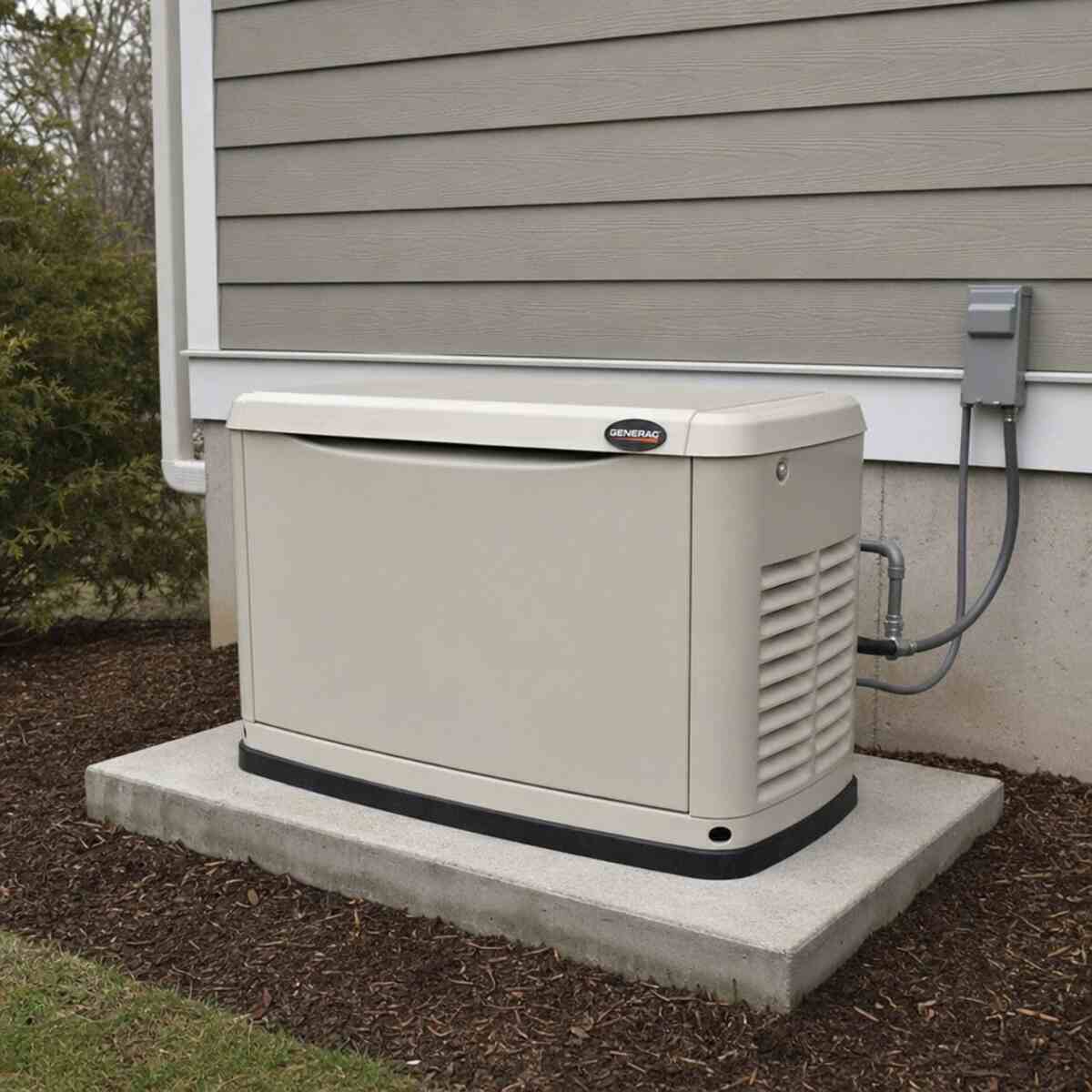
If your dream version of home power backup is “the lights go out, the system starts itself, and I barely have to think about it,” the Generac Guardian 22kW is the most complete choice on this list. It is a permanently installed standby generator designed to run on natural gas or liquid propane, and the 22kW spec class is aimed at homeowners who want more than a refrigerator-and-router emergency setup.
The 22kW Guardian spec sheet lists 22,000 watts on liquid propane and 19,500 watts on natural gas, with 240V single-phase output, less than 5 percent total harmonic distortion, and a 67 dBA sound rating at 23 feet under normal load. The same spec sheet lists a 466-pound unit weight and 48 by 25 by 29 inch dimensions for the 22kW model. (generac.com)
Why it stands out
The big advantage is automation. With the right transfer switch and professional installation, a standby generator can start after an outage, transfer selected or whole-home loads, and keep running from a plumbed fuel source. That matters for frequent outages, medical-equipment planning, sump pumps, freezers, remote work, and households where someone may not be able to roll out a portable generator in a storm.
Generac’s installation guidance describes a typical standby installation as including site selection, a prepared pad, fuel-line connection, transfer switch installation near the main breaker box, and a simulated outage test before completion. It also notes that a closer location to the gas line and electric meter can reduce installation cost. (generac.com)
Pros
- Strong enough for many whole-home or near-whole-home backup plans.
- Automatic operation when installed with the appropriate transfer equipment.
- Natural gas or propane operation avoids gasoline storage.
- Weather-protected permanent installation.
- Good fit for long outages where manual refueling would be exhausting.
Cons
- Requires professional installation, permits, and local code compliance.
- Higher total project cost than portable generators.
- Natural gas output is lower than propane output.
- Not portable if you move.
- Annual maintenance and battery upkeep still matter.
Best fit
Choose the Generac Guardian 22kW if you want the most seamless backup experience and are prepared for a professionally installed system. It is especially compelling for homes with central HVAC priorities, well pumps, sump pumps, large refrigerators or freezers, and outage-prone neighborhoods.
Skip it if
Skip it if you only need to run a refrigerator, a few lights, a Wi-Fi router, and phone chargers. A portable generator or battery system can meet those needs at a lower entry cost.
Budget guidance
Do not shop this as a generator-only purchase. Standby systems are projects. Generac states that average home standby generator installation costs range from about $8,000 to $16,000 including the generator itself, while HomeGuide lists whole-house generator installed averages around $6,000 to $11,000, with higher totals for long runs or larger systems. Treat these as planning ranges, not quotes. (generac.com)
2. Westinghouse WGen10500TFc — Best high-output portable for larger backup loads
The Westinghouse WGen10500TFc is the portable powerhouse in this lineup. If you want a generator that can connect through a properly installed inlet and support a serious emergency panel, this is the “big muscle” option.
Westinghouse lists the WGen10500TFc as a tri-fuel portable generator with gasoline, propane, and natural gas capability. Its stated outputs are 13,500 peak and 10,500 running watts on gasoline, 12,500 peak and 9,500 running watts on propane, and 10,000 peak and 8,500 running watts on natural gas. Westinghouse also lists up to 19 hours of runtime at 25 percent load on a 9.5-gallon gasoline tank and up to 7 hours on a 20-pound propane tank. (westinghouseoutdoorpower.com)
Why it stands out
The Westinghouse wins on raw portable output and fuel flexibility. A 50-amp capable portable generator can be a strong match for homes that want to power multiple essential circuits, a well pump, sump pump, refrigerator, freezer, furnace blower, lights, internet gear, and perhaps selected larger loads depending on the panel design.
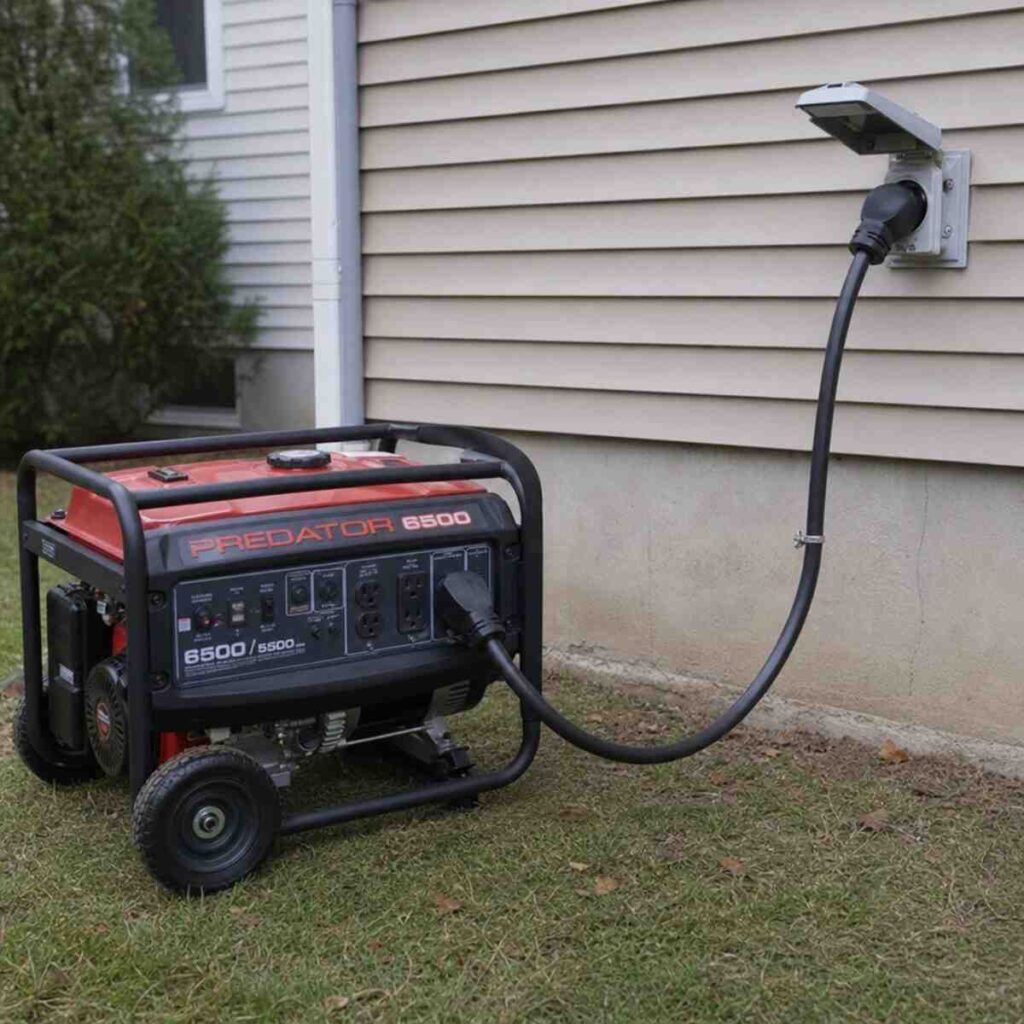
It is also “transfer switch and interlock kit ready,” according to Westinghouse, with L14-30R and 14-50R connection options designed for single-cord hookup to suitable home backup equipment. That does not mean you can connect it casually. It means it is a candidate for an electrician-installed inlet, transfer switch, or approved interlock configuration. (westinghouseoutdoorpower.com)
Pros
- Highest portable output in this top five.
- Runs on gasoline, propane, or natural gas.
- Useful 30-amp and 50-amp style connection options.
- Remote and electric start.
- Strong match for larger essential-load panels.
Cons
- Open-frame portables are loud compared with quiet inverter models.
- Heavy and less pleasant to move than smaller units.
- Gasoline runtime drops as loads increase.
- Natural gas output is lower than gasoline output.
- Requires outdoor operation and proper transfer equipment for home wiring.
Best fit
This is a strong candidate if you want one portable generator that can cover a lot of circuits during an outage and you are comfortable with storage, setup, maintenance, and fuel planning. It may be the best emergency generator for home users who want serious output without committing to a permanent standby installation.
Skip it if
Skip it if your priority is quiet operation, clean inverter-style power, easy one-person movement, or indoor-safe backup. For sensitive electronics and lower-noise operation, the Honda, Champion inverter, or EcoFlow may fit better.
Budget guidance
Plan beyond the generator. For a high-output portable, you may need a 30-amp or 50-amp inlet, outdoor-rated generator cord, interlock or transfer switch, appropriate breaker work, weather-safe placement, fuel hoses, and storage. HomeGuide lists portable generators broadly at $500 to $2,500 plus transfer-switch costs, but higher-output tri-fuel models and electrician work can push a real setup above the basic portable range. (homeguide.com)
3. Champion 9000W Tri-Fuel Open Frame Inverter — Best tri-fuel inverter portable
Champion’s 9000W Tri-Fuel Open Frame Inverter, model 201176, is the clever middle path: more flexible than a gasoline-only inverter, cleaner and generally more refined than many conventional open-frame generators, but still portable and home-backup friendly.
Champion lists this model at 9,000 starting watts on all three fuels, with 7,250 running watts on gasoline, 6,525 running watts on propane, and 5,875 running watts on natural gas. It includes CO Shield, electric start, 120V and 240V output, a 30-amp locking outlet, a 14-50R outlet, covered outlets, and listed run times of 14 hours on gasoline and 12 hours on propane at 25 percent load. (championpowerequipment.com)
Why it stands out
This Champion is the best blend of fuel flexibility and inverter technology in the group. The open-frame design keeps it more generator-like than a suitcase inverter, but the inverter architecture is appealing if you care about cleaner power for electronics, variable engine speed, and less noise than many traditional generators in this wattage class.
Champion lists the noise level at 72 dBA and describes the unit as 50 percent quieter and 20 percent lighter than a traditional 7,250-watt generator. The manufacturer also states that CO Shield can shut off the engine if elevated carbon monoxide levels are detected, while clearly warning that CO Shield is not a substitute for CO alarms or safe operation. (championpowerequipment.com)
Pros
- Tri-fuel flexibility out of the box.
- Inverter output for cleaner power than many conventional portables.
- 120V and 240V capability.
- 30-amp and 50-amp style outlets for backup-panel planning.
- CO Shield auto-shutoff feature.
- Lighter than many high-output open-frame units.
Cons
- Lower running watts than the Westinghouse, especially on natural gas.
- Still not quiet in the way a small enclosed inverter is quiet.
- Not parallel capable.
- Requires outdoor operation, cords, and proper home connection gear.
- Natural gas output may limit large motor loads.
Best fit
Choose this model if you want the flexibility of natural gas, propane, and gasoline, but you also want inverter benefits. It is a strong pick for homeowners who plan to run an essentials panel, power sensitive electronics, and avoid storing large amounts of gasoline.
Skip it if
Skip it if you need the highest possible portable wattage. The Westinghouse has more muscle. Also skip it if you want a fully automatic system; this is still a manual portable setup unless paired with specialized equipment and professional design.
Budget guidance
This category is often the sweet spot for homeowners who want a capable home emergency generator without standby-generator installation costs. Still, the final system cost should include the generator, cord, inlet, transfer equipment, fuel connections, maintenance supplies, and electrician labor.
4. Honda EU7000iS — Best quiet premium gasoline inverter
The Honda EU7000iS is the refined choice. It is not the cheapest. It is not the most powerful. It is also gasoline-only. But if your priorities are quiet operation, inverter output, excellent runtime efficiency, and a premium ownership experience, this Honda earns its place.
Honda lists the EU7000iS as a 120V and 240V inverter generator with 7,000 watts maximum output and 5,500 watts rated output. The unit has a 5.1-gallon fuel tank, runs up to 6.4 hours at rated load and 16 hours at quarter load, and is rated at 58 dBA at rated load and 52 dBA at quarter load. Honda also lists electric and recoil starting, CO-MINDER carbon monoxide detection, Bluetooth app capability, a 263.2-pound dry weight, and a 3-year residential warranty. (powerequipment.honda.com)
Why it stands out
This is the generator for people who want fewer compromises in daily usability. During a long outage, noise fatigue becomes real. A quieter inverter can be easier on the household and less likely to sour neighbor relations.
The rated 5,500 running watts will not power everything in a large home, but it can be an elegant solution for essentials: refrigeration, internet equipment, lighting, a furnace blower, a sump pump, a microwave used selectively, and small electronics. Honda also notes that two identical EU7000iS units can be paralleled with an optional kit for up to 14,000 watts, though that adds considerable cost and complexity. (powerequipment.honda.com)
Pros
- Quietest combustion generator on this list.
- Inverter output is friendly to sensitive electronics.
- Excellent quarter-load runtime for its tank size.
- Electric start plus recoil backup.
- CO-MINDER safety feature.
- Strong premium-generator reputation.
Cons
- Gasoline only.
- Lower running wattage than the larger tri-fuel portables.
- Heavy for a “portable” unit.
- Premium price category.
- May not support large 240V loads without careful load planning.
Best fit
Choose the Honda EU7000iS if you value low noise, clean power, and fuel efficiency more than maximum wattage. It is a particularly good fit for smaller homes, cabins, home offices, and households that want a calm, controlled essentials-backup plan.
Skip it if
Skip it if your backup strategy depends on natural gas or propane, or if you need to run many high-draw appliances at once. For bigger loads, look at the Generac or Westinghouse.
Budget guidance
Expect this to sit in the premium portable category. The smarter comparison is not “watts per dollar,” but “watts you can live with.” If noise, electronics, and reliability matter more than raw wattage, the Honda’s value equation improves.
5. EcoFlow DELTA Pro Ultra — Best indoor-safe battery backup alternative
The EcoFlow DELTA Pro Ultra is not a fuel-burning generator. It is a modular battery power station and whole-home backup ecosystem. That distinction matters. If you need days of heavy HVAC runtime with no solar and no grid recharge, a fuel-based generator may be better. If you want quiet, indoor-safe, fume-free backup for essential circuits and electronics, the EcoFlow is a compelling alternative.
EcoFlow lists the DELTA Pro Ultra at 6,144Wh capacity per battery, 7,200W continuous AC output, 10.8kW surge output, LFP battery chemistry, 120V and 240V output, up to 5.6kW solar input per inverter, and expandable capacity up to 30kWh per single unit configuration or 90kWh in a larger system. The listed inverter weight is 70 pounds and the battery weight is 111.8 pounds. (us.ecoflow.com)
Why it stands out
The biggest advantages are safety, silence, and electronics-friendly power. There is no gasoline storage, no engine exhaust, no oil change, and no need to run a combustion generator in bad weather. For homes with frequent short outages, it may feel more like an appliance than a machine.
The limitation is energy capacity. A 6,144Wh battery can run many small essentials for a meaningful stretch, but large loads such as central air, electric heat, water heaters, well pumps, dryers, and ovens can drain batteries quickly. EcoFlow’s expandability helps, but every extra battery adds cost and weight.
Pros
- Indoor-safe operation because there is no combustion exhaust.
- Quiet backup for electronics, internet, refrigerators, and selected circuits.
- LFP battery chemistry.
- 120V and 240V output capability.
- Expandable battery capacity.
- Solar recharge option.
Cons
- Runtime depends heavily on battery capacity and load size.
- High upfront cost when expanded for whole-home coverage.
- Solar performance depends on weather, panel size, and installation.
- Heavy modular components.
- Not a direct replacement for an unlimited-fuel standby generator.
Best fit
Choose the EcoFlow if you want silent backup for essentials, cannot safely place or store a fuel generator, or want a battery-first system that can integrate with solar. It is especially attractive for home offices, medical-device planning with professional guidance, apartments where allowed, and households that prioritize indoor-safe operation.
Skip it if
Skip it if your biggest need is running high-draw appliances for multiple days without sun or grid recharge. In that scenario, a fuel-powered standby or portable generator may be a better primary backup.
Budget guidance
Think in capacity tiers. One battery is an essentials backup. Multiple batteries plus a smart panel move the system toward whole-home backup. The cost can climb quickly, so calculate watt-hours, not just watts.
Side-by-side comparison in plain English
If you want the least effort during an outage, pick the Generac Guardian 22kW. It is the closest thing to a set-it-and-forget-it home backup solution, assuming professional installation and a reliable fuel source.
If you want the most portable wattage, pick the Westinghouse WGen10500TFc. It is the strongest portable option here for larger emergency loads.
If you want the best balance of tri-fuel flexibility and cleaner inverter power, pick the Champion 9000W Tri-Fuel Open Frame Inverter. It gives up some wattage compared with the Westinghouse but gains inverter appeal.
If you want the quietest combustion generator, pick the Honda EU7000iS. It is premium, polished, and practical for essential loads.
If you want quiet indoor-safe backup, pick the EcoFlow DELTA Pro Ultra. It is not the same as an engine generator, but for the right home it can be the smartest backup system.
Concise buyer’s guide: how to choose the best home emergency generator
Start with your actual loads
Do not begin with generator size. Begin with the appliances and circuits you want to run.
Common essentials include:
- Refrigerator and freezer.
- Sump pump.
- Well pump.
- Furnace blower or boiler controls.
- Internet modem and router.
- Phone and laptop charging.
- A few lighting circuits.
- Garage door opener.
- Medical equipment, with professional advice.
Then separate “must run” from “nice to run.” Central air conditioning, electric water heaters, electric ovens, clothes dryers, and heat pumps can dramatically change your generator size.
Understand starting watts versus running watts
Motors need a temporary surge to start. That is why a sump pump or well pump can demand more power for a few seconds than it uses while running. Running watts tell you what the generator can provide continuously. A smart backup plan leaves headroom so the generator is not constantly straining.
Pick your fuel strategy
- Gasoline is common and energy dense, but storage life and refueling safety are concerns.
- Propane stores well and is popular for emergency planning, but output is often lower than gasoline.
- Natural gas can be convenient for long outages if service remains active, but output is often lower than gasoline and gas utility interruptions are possible.
- Battery backup is quiet and indoor-safe, but runtime depends on stored watt-hours and recharge options.
Decide portable versus standby
A portable generator costs less upfront and can be stored when not needed. But you must move it outdoors, connect cords, manage fuel, and maintain it.
A standby generator costs more and requires a contractor, permits, and fuel plumbing. But it can start automatically and power selected or whole-home loads with far less manual effort.
A battery backup system removes exhaust and engine maintenance, but you must size the battery bank carefully.
Plan the electrical connection before buying
Never backfeed power through a dryer outlet or household receptacle. If you want to power home circuits, use a properly rated transfer switch, transfer panel, or approved interlock and inlet installed by a qualified electrician. NFPA guidance says a qualified electrician should install a properly rated transfer switch when connecting a generator to house wiring, in accordance with the NEC and applicable state and local electrical codes. (nfpa.org)
Budget for the whole system
For a portable setup, budget for:
- Generator.
- Outdoor-rated generator cord.
- Inlet box.
- Transfer switch or interlock.
- Electrician labor.
- Fuel cans, propane tanks, or gas hose setup.
- Cover, oil, filters, spark plug, and maintenance supplies.
For a standby setup, budget for:
- Generator.
- Transfer switch.
- Pad or base.
- Electrical work.
- Gas plumbing or propane tank work.
- Permits and inspection.
- Maintenance plan.
For a battery setup, budget for:
- Inverter.
- Batteries.
- Smart panel or transfer equipment if needed.
- Solar panels if desired.
- Installation labor.
- Expansion capacity.
Safety and installation disclaimer
Portable fuel-burning generators can produce deadly carbon monoxide. The CPSC says portable generators should never be used inside homes or garages, even with doors and windows open, and should be used outside at least 20 feet away from the home with exhaust facing away. CPSC also recommends CO alarms on every level and outside sleeping areas. (cpsc.gov)
This article is general buying guidance, not electrical, plumbing, mechanical, medical, or legal advice. Consult licensed electricians, qualified generator installers, local building officials, utility requirements, manufacturer manuals, and applicable local codes before purchasing or installing any home power backup system.
FAQs
What size generator do I need for a house?
For essentials only, many homes can work with a portable generator in the 5,000 to 9,000 running-watt range, depending on pumps, furnace blowers, refrigerators, and startup loads. For whole-home backup with central HVAC, many homeowners look at standby generators in the teens to 20-plus kW range. The right answer requires a load calculation.
Is a standby generator better than a portable generator?
A standby generator is better if you want automatic operation, higher power, and less manual work. A portable generator is better if you want lower upfront cost and can safely manage setup, fueling, and storage.
What is the best emergency generator for home use overall?
For automatic whole-home coverage, the Generac Guardian 22kW is the strongest overall pick in this list. For portable backup, the best choice depends on your priority: Westinghouse for maximum wattage, Champion for tri-fuel inverter balance, and Honda for quiet premium operation.
Can I run a generator in my garage if the door is open?
No. Do not run a portable generator in a garage, basement, crawlspace, shed, carport, or enclosed or partially enclosed area. Use it outdoors, away from openings, with exhaust directed away from people and buildings. (nfpa.org)
Do I need a transfer switch?
If you want to power circuits through your home’s electrical panel, you need a safe, code-compliant transfer method such as a transfer switch or approved interlock installed by a qualified electrician. If you do not have that, plug appliances directly into the generator using appropriate outdoor-rated cords and follow the manual.
Is tri-fuel worth it?
Tri-fuel is worth it if you want options. Gasoline offers strong output, propane stores well, and natural gas can reduce refueling hassle. The tradeoff is that output often changes by fuel type, so size the generator using the fuel you expect to rely on most.
Are battery generators safer than gas generators?
Battery backup systems avoid carbon monoxide from engine exhaust, which is a major safety advantage. However, they still require correct electrical installation, proper ventilation per manufacturer guidance, and careful sizing. They are safer in one important way, but not maintenance-free magic boxes.
What should I buy if I only need refrigerator, internet, lights, and phone charging?
You probably do not need a 22kW standby generator. A smaller inverter generator or battery system may be enough. Calculate wattage, add startup headroom, and decide how long you need those loads to run.
What should I buy if I need a well pump or sump pump?
Prioritize 240V capability if your pump requires it, and verify startup surge. The Westinghouse, Champion, Honda, Generac, and EcoFlow options here all have 120V and 240V capabilities in their respective configurations, but your electrician should confirm compatibility with your exact pump and transfer setup.
How often should I maintain a home emergency generator?
Follow the manufacturer’s manual. In general, fuel generators need oil checks, oil changes, spark plug inspection, air filter service, battery checks for electric start models, exercise runs, and fuel-system care. Standby units usually need scheduled professional maintenance. Battery systems need firmware, battery-health, storage, and connection checks.
Final verdict
The Generac Guardian 22kW is the best home emergency generator for homeowners who want automatic whole-home style backup and are ready for a professional installation.
The Westinghouse WGen10500TFc is the best high-output portable for homeowners who want serious wattage and tri-fuel flexibility.
The Champion 9000W Tri-Fuel Open Frame Inverter is the best balance pick for cleaner portable power with multiple fuel options.
The Honda EU7000iS is the best quiet premium fuel generator for essential circuits.
The EcoFlow DELTA Pro Ultra is the best indoor-safe battery alternative for silent, fume-free backup.
Choose the generator that fits your home, not the one with the biggest number on the box. That is how you build a backup plan that works when the weather turns ugly and the neighborhood goes dark.
