


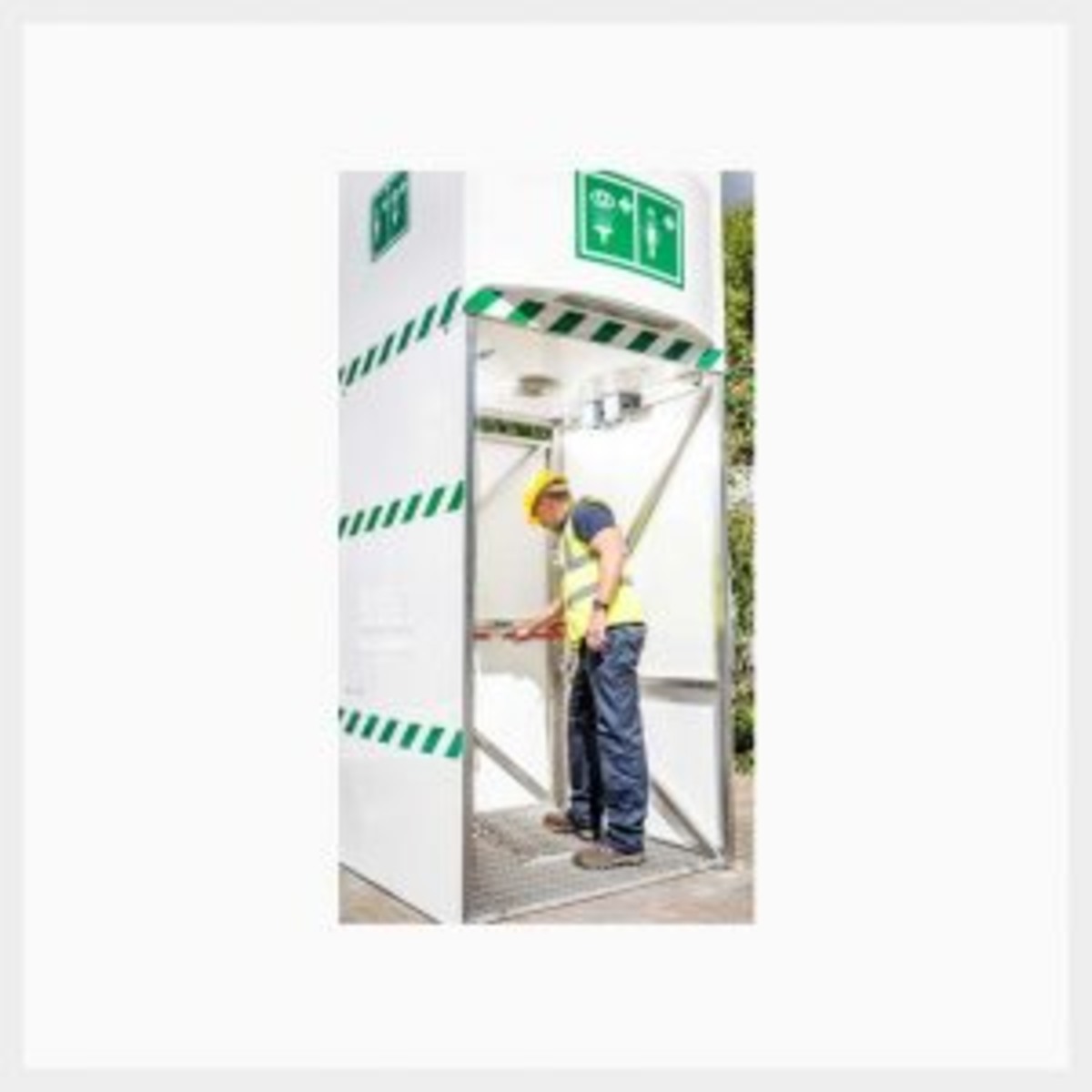
A splash, and the clock begins when you’re in contact with corrosive substances. Most of the injuries to your skin or eyes happen within the first 10-15 seconds of contact. Before purchasing a safety shower for emergencies, ensure you have an understanding of what it must do as per the Australian Standards.
What are the requirements of AS 4775?
Before you shop emergency safety shower, you must know that a compliant safety shower must supply 75.7L of water/min for a minimum of 15 minutes so that a person is completely soaked, not simply rinsed.
For an eyewash, this is 1.5L/min for the same duration as a safety shower. For a face wash, it’s 11.4L/min for the same timeframe as a safety shower and eyewash. Water should be tepid, which means no colder than 16C or hotter than 38C. If the water is too cold, many people will not finish rinsing, and if the water is too hot, the chemical will continue working faster than it should.
Finally, the valve must move from the fully closed position to the fully open position in less than 1 second and remain open without being held open (because the injured person’s hands will most likely not be free).
Fix the Location Range Before You Shop for an Emergency Safety Shower
The standard specifies that there must be no more than ten seconds (or fifteen yards of clear, flat travel) between a unit providing access to emergency shower facilities and a hazard representing an exposure to a strong acid spill.
Place the unit immediately next to the specific tasks associated with the hazard. To comply with this requirement, all travel routes (including stairways and doorways) and any items between the unit and the hazard must be free, clear and visible, as well as properly illuminated and signed.
You also need to consider where the contaminated run-off is going to end up during the fifteen-minute span that will be required to drench something, and whether this will create a second hazard by flooding your workplace. This means that you need a floor drain to eliminate the potential of flooding.
Summary
Your final decision as to which one is the best for the specific needs does not start this way. A map showing the location and measurements of where your corrosives will be handled; the walk distance to the nearest available water supply; and at what temperature your water supply will operate must be completed first. After this, the units available for comparison may be reviewed.
Contact the Spill Station team at www.spillstation.com.au/contact-us for additional assistance in finding the correct product for your specification.
