


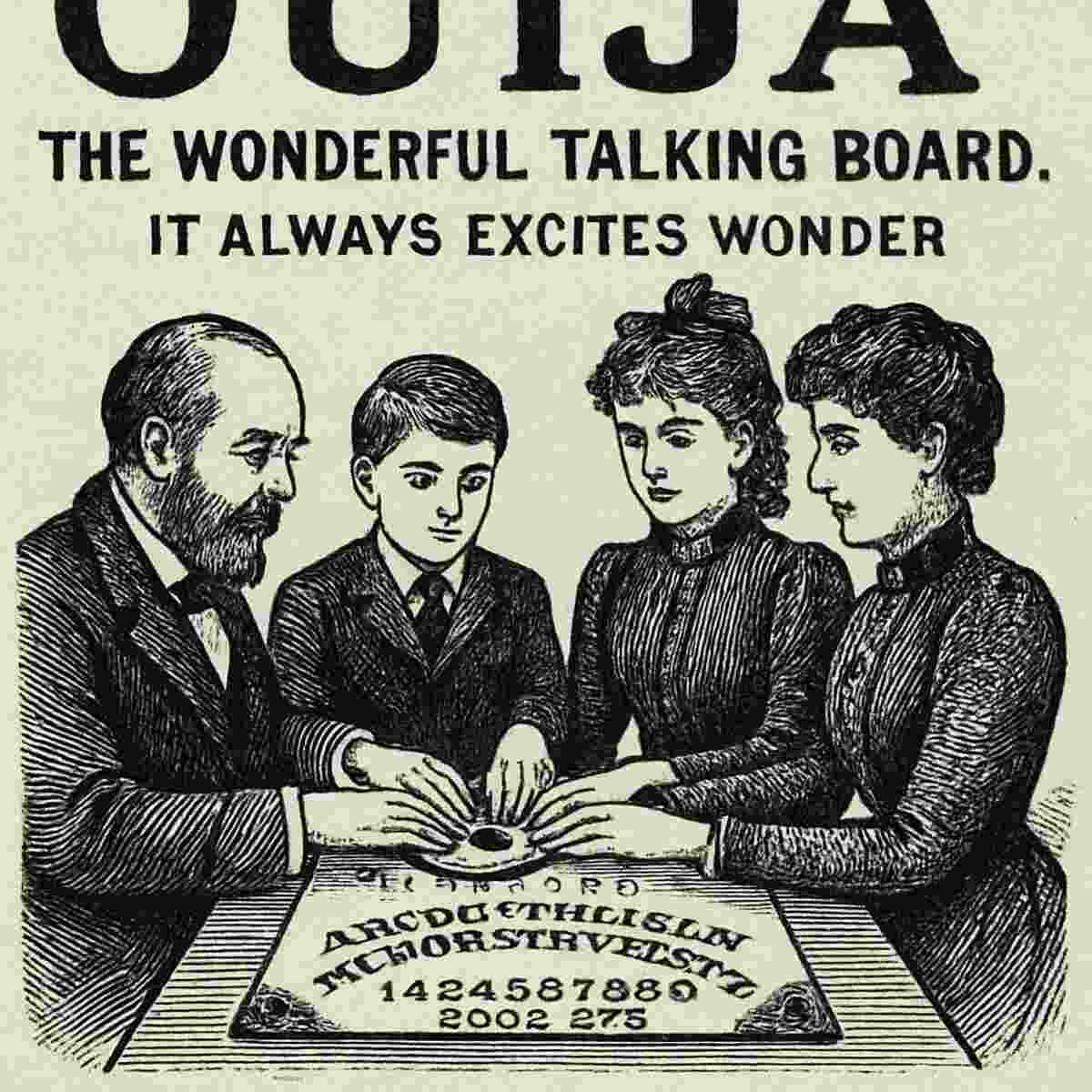
Before it was a horror movie prop, the Ouija board was a patented toy. In truth, the board’s origin has less to do with ancient spirits and more to do with savvy American businessmen in 1890. Marketed by Elijah Bond, the original “talking board” was sold not as a portal to another dimension, but as a fascinating parlor game for the whole family, as innocent as checkers or chess. Check out nemo189 to know more
This new invention arrived at the perfect time. The late 19th century was the peak of the Spiritualism movement, a widespread cultural trend where many people, grappling with the losses of the Civil War, sought comfort by attempting to communicate with the deceased. The talking board game quickly became a popular tool for séances and curious amateurs alike, fitting perfectly into the era’s fascination with the unknown.
For decades, the Ouija board was viewed as just that: a game. Advertisements from the early 1900s show families and courting couples casually using it for entertainment. Parker Brothers, a name synonymous with board games like Monopoly, eventually acquired the rights and sold millions. The history of the spirit board is not one of dark occultism, but of a commercial product that captured the public’s imagination.
So, how did this mainstream family pastime morph into the terrifying object we see in movies today? The shift in perception over the 20th century, fueled by scary stories and cinematic portrayals, cemented its spooky reputation. This journey from parlor game to horror icon explains how it’s now evolving once more—into the virtual world.
The Digital Leap: How Developers Recreate the Ouija Experience Online
Translating the spooky, hands-on feel of a traditional Ouija board to a screen presents a unique challenge. With no physical planchette for players to touch, the central question becomes: what is guiding the pointer? The secret behind a digital planchette moving lies in clever programming. Developers typically use one of two main methods to recreate the experience, determining whether you’re interacting with a simple program or the subtle inputs of other players.
The simplest approach relies on an algorithm, which is just a set of pre-written rules the program follows. Think of it like a digital Magic 8-Ball. When you ask a question, the code might pick a random response or pull from a library of creepy, pre-programmed phrases. This method is common in single-player games and apps, creating an illusion of communication that is controlled entirely by the software.
A more interactive method, often used in multiplayer games, involves aggregating player input. The game tracks the tiny, almost unnoticeable movements of every player’s mouse or finger on a touchscreen. It then averages all these micro-movements together to guide the planchette across the virtual board. In this case, the players are collectively moving the pointer, even if no single person feels responsible for its path.
Method 1: The “Ghost in the Code” and Randomly Generated Answers
The algorithmic method drives most single-player games where you see a virtual planchette moving on its own. Instead of a mysterious force, a simple computer program pulls the strings. It’s essentially a themed chatbot designed to create a spooky atmosphere by spelling out pre-determined messages, much like a digital Magic 8-Ball offers up its classic answers.
To make those messages feel unpredictable, the program uses a Random Number Generator (RNG). You’ve likely seen RNG at work in video games with random item drops or surprise enemy moves. For an online Ouija board, the code essentially rolls dice to pick the next letter, creating words or phrases that feel unplanned. It’s this programmed chance that makes the board seem responsive.
This digital dice-rolling is why answers can often feel generic or even nonsensical. The planchette might spell “D-A-R-K,” or just a jumble of letters. If you’re looking for a simple, spooky online ouija alternative for one, this is perfect. The randomness is a clear sign you’re interacting with code, not a conscious entity.
This “ghost in the code” provides a controlled, solo scare. The experience changes dramatically, however, when other people join. The technology behind a free multiplayer spirit board simulator often ditches the code’s randomness and instead relies on a far more subtle force: the players themselves.
Method 2: How Your Own Mouse Movements Guide the Planchette with Friends
When you play spirit board with friends online, the technology often gets far more subtle and interesting. Instead of relying on a program to spell out answers, many multiplayer games use a clever system that harnesses the power of the players themselves. The game monitors the tiny, almost invisible movements of every person’s mouse or finger on their touchscreen.
The secret lies in averaging these inputs. Imagine a tiny, digital tug-of-war where everyone is pulling the planchette in a slightly different direction. If you and two friends are all unconsciously drifting your cursors toward the letter ‘Y’, the game’s code combines that force and nudges the virtual planchette moving that way. Since your individual contribution is so small and mixed with others, you never feel like you’re the one in control.
This is precisely what makes a multiplayer spirit board simulator feel so authentic and unpredictable. The pointer’s final path isn’t what any single person commanded; it’s the blended, democratic result of everyone’s microscopic drifts and hesitations. The movement appears smooth and independent, creating the powerful illusion that another presence has joined the game to guide your hands.
The surprising truth in these games is that you and your friends are the ones moving the pointer all along. If you’re all collectively in control, why does it feel like no one is? The answer isn’t technical but psychological, and it reveals how easily our own minds can create a haunting experience.
The Real “Spirit” Behind the Board: Unpacking the Ideomotor Effect
That eerie feeling of the planchette moving on its own, even when you swear you’re holding still, has a scientific name. Psychologists call it the ideomotor effect, and it’s the most widely accepted explanation for the Ouija board’s mysterious movements. The idea is simple: your brain can make your muscles move in tiny ways without you consciously deciding to do it.
Think about watching a tense sports game and finding yourself leaning your body as if you could help steer the ball into the goal. You aren’t trying to move, but your brain’s intense focus on an outcome creates a small, involuntary physical reaction. The ideomotor effect is that same principle at work, just on a much smaller scale with your hands and fingers.
When multiple people have their hands on a planchette (or their cursors hovering in an online game), everyone is doing this at once. You expect the pointer to move to “Y-E-S,” so your hand makes microscopic adjustments to guide it there. These tiny, combined movements are enough to glide the planchette across the board, making many paranormal communication games feel startlingly real. The movement feels external because no single person feels responsible for it.
The ideomotor effect suggests the real power isn’t coming from an outside entity, but from our own minds. This means the primary risk of asking are online spirit boards dangerous isn’t supernatural, but psychological—the power of suggestion in a spooky setting can easily make us scare ourselves.

Digital Talking Board vs. Physical: A Head-to-Head Comparison
With the psychology behind the planchette explained, the big question is: which version delivers a better spooky experience? The classic wooden board has a powerful legacy, but the digital talking board vs physical debate really comes down to convenience versus atmosphere. Each format offers a completely different feel, with its own distinct advantages and disadvantages.
Deciding between them depends entirely on what kind of experience you’re looking for. Here’s a quick breakdown:
- The Physical Board
- Pros: The tactile sensation of the moving planchette and the tense, in-person group atmosphere are hard to beat for creating genuine chills.
- Cons: It requires getting a group together in one place, and of course, someone has to own and store the bulky board.
- The Digital Board
- Pros: It’s a great online ouija alternative you can access instantly. Best of all, it allows you to play spirit board with friends online, no matter where they are.
- Cons: The experience lacks that physical tension. Knowing code is involved can make it feel less “authentic” or mysterious to some players.
Neither is better—they’re just different tools for different situations. If you crave a classic, atmospheric party game, nothing tops the original. But for a quick solo scare or a fun way to connect with friends across long distances, digital versions are an excellent and accessible solution.
Where to Play: Top Online Ouija Board Simulators
A quick search for an ouija board game online reveals dozens of options, and they aren’t all the same. Some are designed for group fun with friends who live far away, while others are built to give you a solitary, spooky experience on your phone.
Here are a few of the best virtual talking board apps and sites, each with a unique spin:
- WebOuija.io: This is the go-to free multiplayer spirit board simulator. You create a private room, send a link to your friends, and the site cleverly averages everyone’s subtle mouse movements to guide the planchette. It’s the best option for recreating that classic sleepover vibe with a long-distance group.
- The Oracle App (iOS/Android): Built for solo players, this app is less of a pure simulator and more of an interactive ghost story. It uses a computer program to generate creepy, often narrative-driven responses, making it feel like a pocket-sized horror game.
- SimpleSpiritBoard.com: For those who just want to try it without any bells or whistles. This minimalist website is exactly what it sounds like—a clean, straightforward board where you can ask a question and get a quick, algorithm-generated answer.
If your primary goal is to connect and have a laugh with your friends, a multiplayer site that combines everyone’s input is by far the most engaging choice. If you’re just curious and want a quick, personal scare, a single-player app will deliver exactly that.
How to Use a Digital Ouija Board: Rules for a Fun Session
Knowing how to use a digital ouija board is less about spooky rituals and more about setting the stage for a good time. Whether playing alone or with friends, the first step is to adopt a playful mindset. This is a modern game, not an ancient ceremony. Dim the lights and silence your notifications to build atmosphere, but remember the goal is entertainment. This simple shift in perspective is the most important part of any good guide to virtual spirit sessions.
The quality of your experience often comes down to the questions you ask. Vague questions like “Will I be happy?” tend to get short, unsatisfying answers. Instead, try asking more open-ended questions that invite a story, such as “What is your name?” or “Where are you from?” This gives the program (or your friends’ combined mouse movements) more room to create interesting or coherent messages.
If you’re in a multiplayer room, patience is key. The planchette might move slowly or erratically as the game’s code averages everyone’s subtle inputs. To keep things from getting chaotic, agree on one person to ask the questions for each round. This keeps the focus clear and is one of the most effective online seance game rules for a smooth session.
The goal is to have a memorable and fun experience. Let the answers build a story, have a laugh with your friends, and don’t take the responses too seriously. The board is a tool for sparking imagination and group interaction.
Are Online Spirit Boards Dangerous? Separating Psychological Risk from Paranormal Panic
The biggest fear surrounding the Ouija board, fueled by a century of horror stories, is that you might accidentally contact something malicious. When considering if online spirit boards are dangerous, the real-world answer has less to do with the paranormal and more to do with psychology and technology. The most significant risks aren’t from another realm, but from our own minds and the websites we visit.
This is where group psychology comes into play. You already know that your own unconscious expectations can guide the planchette through the ideomotor effect. When you’re in a group, this is magnified. If one person gets spooked by an answer, their anxiety can create a feedback loop, subconsciously influencing others to spell out even more frightening messages. This phenomenon, known as group suggestibility, can make virtual spirit sessions feel terrifyingly real, even when the “spirit” is just a reflection of the group’s own rising panic.
Beyond the psychological aspect, there’s a more practical digital threat. The safest online ouija experience involves being mindful of where you’re playing. Many free online Ouija simulators are hosted on low-quality websites filled with intrusive ads or, worse, designed to trick you into giving up personal data. A pop-up asking for your email address to “enhance your connection to the spirit world” is a far more tangible threat than any digital phantom.
To ensure a session stays fun, play with a lighthearted mindset and on a reputable site that respects your privacy. By managing these real-world risks, you can focus on what makes the game compelling: the shared story you create.
From “What Is My Future?” to “What Is the Name of the Ghost?”: Questions to Ask a Digital Spirit Board
The single most important part of any Ouija session is the question. Asking a huge, vague question like “What is my future?” can stall the game, as it’s too broad for either a simple program or your group’s subconscious mind to answer effectively. The best questions are focused, open-ended, and designed to get a story started rather than demand a single, cosmic truth.
To make your experience more engaging, try rotating through a few different types of prompts. When you ask a question to a digital spirit board, consider one of these categories:
- Fun & Silly Questions: These lower the stakes and keep things lighthearted.
- Examples: “What should we name our band?” or “What toppings should we get on our pizza?”
- Creative Story-Telling Questions: These are perfect for building a shared narrative.
- Examples: “What is your name?” or “What year are you from?”
- Gentle Self-Reflection Questions: These can spark interesting group conversations.
- Examples: “What should we focus on to be happier?” or “What hobby should I try next?”
Following these informal online seance game rules transforms the experience from a truth-seeking mission into a collaborative storytelling game. Your questions become the prompts that build a unique narrative with your friends. This creative process is exactly what makes the game compelling.
What to Do When an Online Session Gets “Too Real”
Because the experience is driven by collaborative storytelling, a session can sometimes feel surprisingly intense. The spooky atmosphere, combined with unsettling answers, can create genuine anxiety. When fun turns to fear, it’s easy to worry if things have gone too far. The real risk when considering if online spirit boards are dangerous isn’t supernatural, but psychological—letting group anxiety spiral out of control. Fortunately, you have all the power to stop it.
The most important step is also the simplest: verbally break the spell. One person just needs to say, “Okay, let’s pause for a second, this is getting a little weird.” This simple act shatters the focused-group consciousness that makes the game feel so real and reminds everyone that you are friends playing a game. Taking a moment to turn on the lights or grab a snack can immediately reset the mood.
After a quick breather, it helps to gently remind the group of the mechanics at play. Recalling that the planchette’s movement is a result of your own group’s tiny, subconscious actions brings everyone back to reality. To bring the session to a clean close, simply move the planchette to “GOODBYE” and close the browser window or app. This part of our guide to virtual spirit sessions provides a sense of formal closure, helping your minds switch off from the game.
Being prepared to de-escalate is the key to the safest online ouija experience. Knowing you can pause, reset, and remind everyone that you are in control removes the fear of the unknown and allows you to appreciate the game for what it is.
The Modern Seance: Fun, Psychology, and a Fascinating Piece of Code
Not long ago, the idea of an ouija board game online might have seemed like a paradox. How could an object that relies on touch and mysterious forces possibly work through a screen? Now, the spooky facade is gone. You’ve journeyed from the 19th-century parlor to the modern browser tab, uncovering the digital and psychological gears that make the planchette glide.
A virtual ouija board operates on one of two simple principles. It is either a clever bit of code designed to serve up random, thematic answers much like a digital Magic 8-Ball, or it is a fascinating reflection of our own minds at work, combining the subtle inputs of multiple players into a single, seemingly independent movement.
The next time you encounter one of these games, try to spot the ideomotor effect explained in action. Notice how group expectation and unconscious movements create the illusion of an outside force. You have moved from being a mystified spectator to an informed observer, able to appreciate the trick instead of just being startled by it.
So, is the experience “real”? The question is more interesting than the answer. The online Ouija board is a unique form of interactive storytelling. The real mystery isn’t what spirits are moving the pointer, but the complex and fascinating ways our own minds create experiences and even a little bit of magic, all on their own.
