


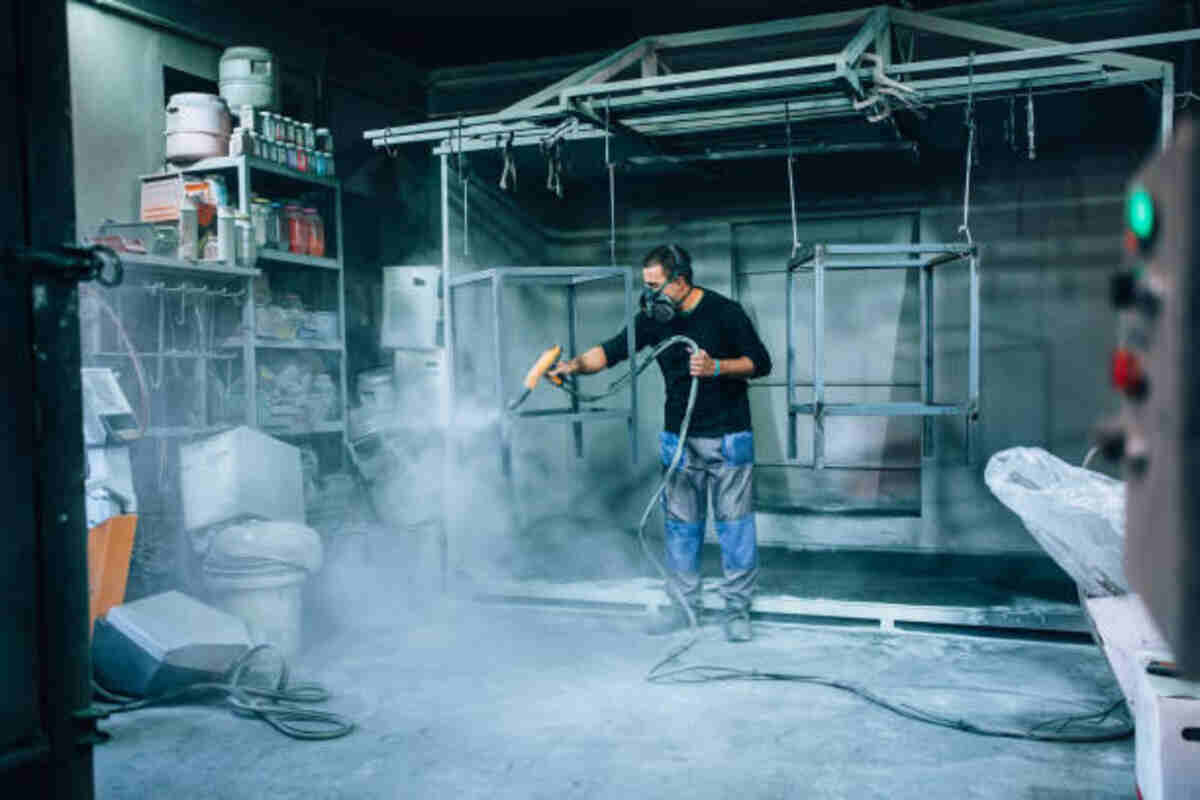
The quality of a powder-coated finish depends on precision and control during application. Over-spraying wastes material, affects surface texture, and raises cleanup time. By understanding the right handling methods and fine-tuning powder coating equipment, technicians can achieve cleaner coats, better adhesion, and more consistent results every time.
Maintain a Consistent Gun-to-Workpiece Distance for Even Coverage
A steady distance between the spray gun and the workpiece ensures the powder reaches the surface evenly. Keeping the professional powder coating gun roughly 6 to 8 inches away helps create a balanced pattern that prevents powder from clouding or scattering. This range maintains the electrostatic field necessary for proper adhesion while avoiding excessive build-up on edges or corners.
Moving too close causes heavy spots and uneven film thickness. Too far away, and the charged particles lose efficiency, drifting in the air instead of bonding. Operators who develop a consistent spray rhythm not only reduce material waste but also improve overall coating smoothness and finish quality.
Adjust Airflow Settings to Match the Powder Type and Part Geometry
Airflow plays a major role in controlling overspray and achieving precise deposition. Adjusting the air pressure according to the powder’s density and particle size keeps the flow stable and reduces turbulence inside the booth. Fine powders require lower pressure, while heavier coatings may need stronger airflow to maintain an even stream. Parts with complex shapes—such as curved panels or recessed sections—benefit from separate air adjustments during coating. This approach ensures consistent coverage in tight areas without overloading flat surfaces. Proper airflow tuning enhances transfer efficiency and maintains the clean environment needed for professional powder coating results.
Keep the Powder Flow Rate Low Until You Achieve a Stable Spray Pattern
Beginners often set the powder flow too high at the start of application, leading to heavy coats and wasted material. By beginning with a lower flow rate, the technician gains control and can watch how the powder cloud behaves before increasing it slightly to achieve the desired pattern. This gradual approach ensures uniform distribution across the surface. Fine-tuning the powder feed maintains consistency and prevents clouding in the booth. Once the ideal pattern forms, steady hand movement and a controlled flow deliver a smooth, even finish that minimizes rework and saves powder.
Ground Every Component Properly to Ensure Maximum Powder Attraction
Grounding is essential for safety and coating efficiency. Without a strong ground, charged powder particles fail to adhere effectively, resulting in poor coverage and higher overspray levels. Each part of the powder coating equipment—from the rack to the conveyor—must have a clean electrical path to ground to complete the electrostatic circuit.
Poor grounding not only reduces transfer efficiency but also risks static buildup, which can cause arcing or uneven coating. Regularly checking and cleaning grounding connections ensures the electrical charge stays balanced throughout the process, improving both finish quality and safety.
Clean the Gun Nozzle Frequently to Prevent Build-Up and Spray Drift
Powder buildup inside the gun nozzle can distort the spray pattern and reduce control. Frequent cleaning keeps the airflow smooth and maintains consistent particle distribution. A blocked or partially clogged nozzle leads to uneven powder output and unpredictable surface coverage.
Using compressed air or soft brushes between coating cycles can prevent residue accumulation. Clean nozzles also extend the life of the professional powder coating gun by maintaining optimal pressure and preventing internal wear caused by hardened powder deposits.
Control Booth Air Movement to Avoid Powder Blowback and Clouding
Proper airflow in the spray booth helps capture excess powder and prevents it from recirculating into the workspace. Balanced exhaust and intake systems maintain a stable pressure zone that directs overspray into filtration areas without disrupting the powder flow from the gun.
Too much air movement creates turbulence that pulls powder away from the workpiece, causing uneven layers or powder fogging. Adjusting fan speeds and ensuring booth filters are clean allows technicians to control overspray effectively and maintain clear visibility during coating operations.
Calibrate the Voltage Regularly to Balance Transfer Efficiency and Finish Quality
The electrostatic charge applied to the powder determines how well it adheres to the metal surface. Calibrating the voltage ensures the right level of attraction between the charged particles and grounded parts. Too high, and the powder may back-ionize, creating rough patches. Too low, and coverage suffers.
Routine calibration of the powder coating equipment allows consistent transfer efficiency, reduces waste, and improves the appearance of the final finish. Regular checks also extend equipment life by preventing internal strain on electrical components.
Store and Handle Powder Material Carefully to Preserve Particle Consistency
Powder material must remain dry and free from contamination to perform as intended. Moisture or debris can cause clogging, uneven spray patterns, or reduced electrostatic charging. Storing powders in temperature-controlled, low-humidity environments maintains their flow characteristics and prevents clumping.
Before loading the hopper, the powder should be gently agitated to loosen compacted areas without breaking down particle size. Consistent storage and handling practices keep the material in top condition, ensuring predictable behavior with every use of a professional powder coating gun. Reliant Finishing Systems provides advanced powder coating equipment and support solutions designed to help technicians apply these practices efficiently, improving coating performance while reducing material loss in professional finishing environments.
