


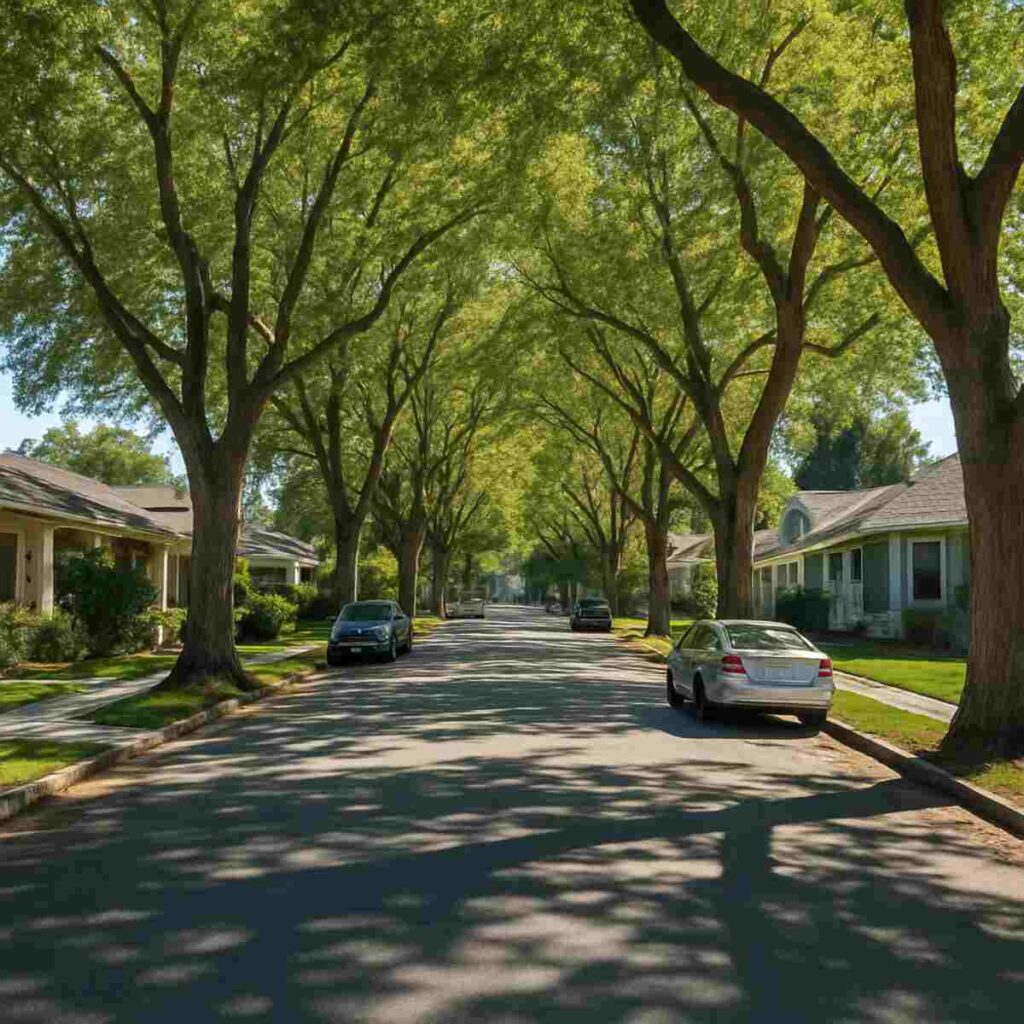
San Jose is a vibrant city known not only as the capital of Silicon Valley but also for its stunning urban forest. From the historic heritage oaks that have shaded the Santa Clara Valley for centuries to the ornamental street trees that line our suburban neighborhoods, trees are an integral part of the local ecosystem. They provide vital shade during blistering summer heatwaves, improve air quality, increase property values, and offer a habitat for local wildlife. However, despite our best efforts to preserve them, trees are living organisms with finite lifespans. Disease, severe weather, structural failure, and urban development inevitably lead to situations where a tree must be taken down. Choose the best tree removal in San Jose.
Navigating the complexities of tree removal in San Jose is not as simple as revving up a chainsaw. It involves a web of municipal regulations, safety protocols, ecological considerations, and significant financial investments. Whether you are dealing with a dead pine threatening to crush your roof, an invasive species choking out your garden, or a massive oak that has sustained severe storm damage, understanding the proper procedures is absolutely crucial.
This comprehensive guide is designed to walk you through every single aspect of managing, mitigating, and ultimately removing problematic trees on your property. From understanding local ordinances to hiring the right professionals and choosing drought-tolerant replacements, this is your ultimate resource for maintaining a safe, legal, and beautiful landscape in the heart of Santa Clara County.
Understanding Tree Health: When Does a Tree Need to Go?
Before committing to the removal of a tree, it is important to conduct a thorough assessment of its health and structural integrity. Property owners often struggle with the emotional attachment they have to mature trees, weighing the aesthetic and environmental benefits against potential risks. However, safety must always come first.
When is a tree considered a safety hazard?
Knowing exactly when is a tree considered a safety hazard? is the first step in responsible property management. A tree is generally deemed a safety hazard when a certified arborist determines that it has a high probability of failure and there is a “target” nearby—such as a house, a driveway, a pedestrian walkway, or power lines—that would be damaged or injured if the tree (or a significant part of it) were to fall.
Several critical indicators suggest a tree has transitioned from an asset to a liability:
- Significant Trunk Decay or Cavities: While a small hollow doesn’t always mean a tree is doomed, large cavities, deep cracks, or extensive heart rot severely compromise the tree’s structural integrity. If more than a third of the trunk is hollow or rotten, the tree is highly susceptible to snapping in high winds.
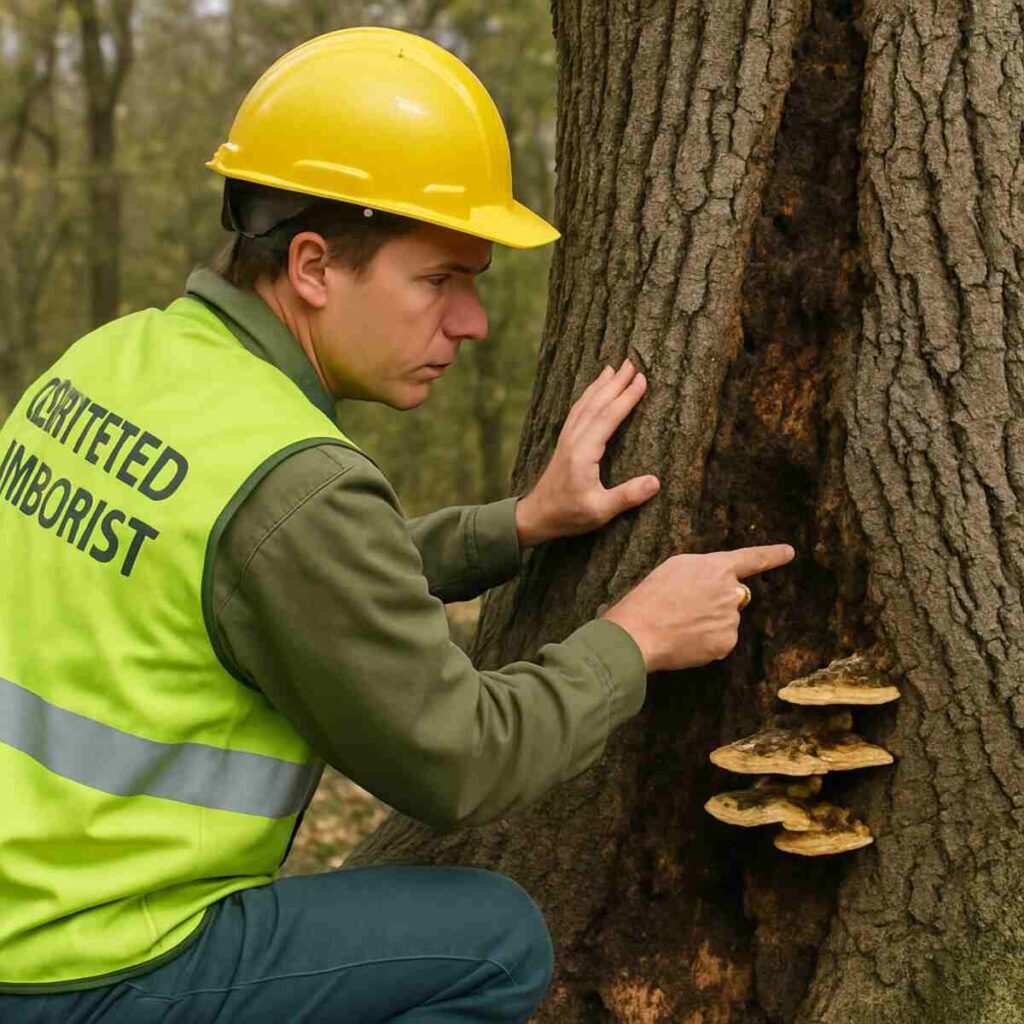
- Fungal Growth at the Base: The presence of mushrooms, conks, or brackets growing around the root flare or on the trunk is a major red flag. These fungi feed on decaying wood and often indicate advanced internal rotting, particularly root rot, which eliminates the tree’s anchor to the ground.
- Sudden and Severe Leaning: A tree that has naturally grown at an angle to reach sunlight might be structurally sound. However, a tree that suddenly develops a lean—especially if accompanied by soil heaving or cracking on the opposite side of the lean—is experiencing catastrophic root failure and requires immediate attention.
- Canopy Dieback and Deadwood: If the upper branches of a tree are dying off, it is a sign that the tree is struggling to transport nutrients and water. While some deadwood is normal and can be pruned, a rapidly dying canopy signals a severe, often irreversible, systemic issue.
- V-Shaped Crotches and Included Bark: Branches that grow at sharp, “V” angles rather than wider “U” angles are inherently weak. As the branches grow, bark gets trapped between them (included bark), preventing a strong wood-to-wood bond. These unions are highly prone to splitting.
Difference Between Tree Pruning and Total Extraction
It is essential to understand the difference between tree pruning and total extraction. Many homeowners mistakenly believe that a sickly or overgrown tree must be entirely removed, when in fact, targeted pruning could save it.
- Tree Pruning: Pruning is a targeted, surgical approach to tree care. It involves removing specific branches to improve the tree’s structure, enhance air flow, increase light penetration, and remove hazardous deadwood. Pruning can alleviate weight from heavy limbs, reducing the risk of failure without sacrificing the tree. Methods include crown thinning, crown raising, and reduction.
- Total Extraction (Tree Removal): Total extraction is the complete dismantling and cutting down of the tree down to the stump. This is a final, irreversible measure taken when pruning cannot mitigate the hazard, the tree is entirely dead, it is an invasive species causing ecological harm, or its root system is destroying critical infrastructure like foundations or main sewer lines.
If you are unsure which route to take, consulting an expert is vital. A professional assessment will often save you money and preserve your landscape if pruning is a viable alternative to extraction.
Navigating San Jose’s Strict Tree Regulations
One of the most complex aspects of tree care in the Bay Area is the legal framework surrounding it. The City of San Jose heavily regulates the pruning and removal of trees to protect its urban canopy. Ignorance of these laws is not a valid defense, and removing a tree without the proper documentation can result in severe financial penalties.
The San Jose Tree Permit Application Process
The San Jose tree permit application process is designed to ensure that trees are only removed when absolutely necessary. Whether or not you need a permit depends entirely on the size, species, and location of the tree in question.
1. Street Trees: Street trees are those located in the public right-of-way, typically the strip of land between the sidewalk and the street curb. Even though it is the homeowner’s responsibility to maintain these trees (including watering and hiring professionals for pruning), the trees technically belong to the City of San Jose. You cannot remove or heavily prune a street tree without a permit. If a street tree is dead or hazardous, you must apply for a Street Tree Removal Permit through the city’s Department of Transportation (DOT) Arborist Office. If approved, the city usually requires the homeowner to plant an approved replacement tree.
2. Ordinance-Size Trees on Private Property: For trees located within your private property (backyard, side yard), the city protects “ordinance-size” trees. An ordinance-size tree is defined as any tree that has a trunk circumference of 56 inches or more (which is roughly 18 inches in diameter) measured at 24 inches above the natural grade. To remove a tree of this size, you must obtain a Permit to Remove an Ordinance Size Tree from the city’s Planning Division. The application requires:
- A completed application form.
- Payment of a non-refundable application fee.
- A site plan showing the exact location of the tree.
- Photographs of the tree, specifically highlighting the disease, damage, or hazard.
- An arborist report (highly recommended and often required) justifying the removal.
3. Heritage Trees: Heritage trees hold a special, highly protected status. These are trees that have been officially designated by the City Council because of their exceptional size, history, or ecological value. Removing a Heritage Tree is extremely difficult and is generally only approved if the tree is completely dead or poses an imminent, unmitigable threat to life or property.
City of San Jose Tree Ordinance Violations
Attempting to bypass the bureaucracy can lead to severe City of San Jose tree ordinance violations. If you cut down an ordinance-size, street, or heritage tree without a permit, the city can levy massive fines against you. These fines can range from a few thousand dollars up to tens of thousands of dollars per tree, depending on the tree’s size and ecological value. Furthermore, the city may require you to plant multiple replacement trees or pay into a city tree fund.
Additionally, if an unlicensed contractor removes the tree and is caught, both the homeowner and the contractor can be cited. Always demand that your chosen tree service provider clearly explains who is responsible for pulling the permit before any work begins.
Focus on California Oaks: Heritage and Hazards
When discussing trees in the Santa Clara Valley, it is impossible to ignore the majestic oak trees. The native oak woodlands are an iconic part of California’s landscape, and many properties in San Jose feature ancient oaks that predate the suburban sprawl.
How to Identify a Hazardous Heritage Oak
Oaks are incredibly resilient, but they are not immortal. Knowing how to identify a hazardous heritage oak is a specialized skill, as these giant trees can weigh dozens of tons, making their failure catastrophic.
Common Native Oaks in San Jose:
- Coast Live Oak (Quercus agrifolia): An evergreen oak with cupped, prickly leaves.
- Valley Oak (Quercus lobata): A deciduous oak known for its massive, sprawling canopy and deeply lobed leaves.
Signs of a Hazardous Oak:
- Sudden Oak Death (SOD): Caused by the water mold Phytophthora ramorum, SOD is a devastating disease prevalent in the Bay Area. Symptoms include bleeding cankers on the trunk (oozing a dark, reddish-brown sap), rapid browning of the leaves, and the death of the entire tree within a single season. If your oak shows signs of SOD, swift action is required to prevent the pathogen from spreading to neighboring trees.
- Oak Root Fungus (Armillaria mellea): This fungus attacks the root system. You might notice clusters of honey-colored mushrooms around the base of the oak during the wet winter months. The canopy may thin, and branch dieback occurs. Because the roots are rotting underground, the tree can look relatively green while being structurally compromised and ready to topple.
- Summer Branch Drop: Valley oaks, in particular, are notorious for a phenomenon known as “Summer Branch Drop.” During prolonged, hot, windless summer afternoons, massive, seemingly healthy horizontal branches can suddenly snap and fall. This is believed to be related to internal moisture stress. Regular inspection and end-weight reduction pruning by an arborist can mitigate this risk.
- Extensive Heart Rot: If an oak has large cavities, you might see the fruiting bodies of fungi like the Oak Bracket (Inonotus dryophilus). While oaks can live for decades with some heart rot, an arborist must use advanced tools (like a resistograph or sonic tomography) to measure the remaining shell wall thickness to determine if the tree can still support its own weight.
Identifying Invasive Species Versus Native California Trees
Not all large trees in San Jose are beneficial. Ecological management often requires identifying invasive species versus native California trees. Invasive trees aggressive outcompete native flora for water and nutrients, offer little value to local wildlife, and can create massive fire hazards.
- Blue Gum Eucalyptus (Eucalyptus globulus): Originally brought from Australia, these towering trees are highly invasive. They shed massive amounts of highly flammable bark and leaves, creating a severe fire hazard. They also drop large, heavy branches unexpectedly and possess shallow root systems that easily fail in wet soil during high winds. The removal of Eucalyptus is frequently recommended by local fire authorities.
- Tree of Heaven (Ailanthus altissima): This rapidly growing invasive species produces chemicals in its roots that prevent native plants from growing nearby (allelopathy). It reproduces aggressively through root suckers, making it incredibly difficult to eradicate without professional chemical and mechanical extraction.
- Acacia Species: While beautiful, many Acacias are invasive, short-lived, and structurally weak, prone to splitting and dropping branches.
Conversely, preserving native species like the California Buckeye, Western Redbud, and native oaks is highly encouraged. When evaluating your property, a knowledgeable arborist can help you differentiate between an overgrown native treasure that needs pruning and an invasive nuisance that requires immediate tree removal in San Jose.
Managing Mother Nature: Storm Damage and Emergencies
The San Jose climate is generally mild, but the winter months can bring severe weather patterns. Atmospheric rivers, “Pineapple Express” storms, and high-velocity Diablo winds can subject the urban canopy to immense stress. When the ground becomes hyper-saturated from weeks of rain, the soil loses its friction. When high winds hit the canopy of a heavy tree sitting in mud, the entire root plate can lift, causing massive trees to uproot entirely.
Emergency Tree Removal
When a tree fails, it rarely does so conveniently. Emergency tree removal is a high-stakes operation that requires immediate response, specialized equipment, and extreme caution. Situations that qualify as an emergency include:
- A tree that has fallen onto a house, car, or garage.
- A tree that is actively blocking a major roadway or your only driveway.
- A tree that has suddenly severely leaned and is hanging precariously over a target.
- A tree that has split down the trunk, with half the canopy threatening to drop.
In these situations, time is of the essence. You cannot wait weeks for a standard municipal permit. (Note: Most cities, including San Jose, have retroactive permit clauses for verifiable emergencies where life or property is in immediate, imminent danger, but you must thoroughly document the hazard with photos and contact the city as soon as business hours resume).
Emergency Arborist Services for Storm Damage
When disaster strikes, you need Emergency arborist services for storm damage. These rapid-response teams are available 24/7.
When you call an emergency arborist, they will first assess the safety of the site. If the tree is resting on a structure, it is under complex tension and compression forces. Cutting the wrong branch can cause the massive trunk to shift, snap, or roll, causing further damage to the house or crushing the worker. Professional crews use heavy-duty cranes, bucket trucks, and specialized rigging systems to lift the weight of the tree off the structure safely before dismantling it piece by piece.
Furthermore, reputable emergency arborists will assist you with the insurance process. They will provide the necessary documentation, invoices, and professional reports required by your homeowners’ insurance to process a claim for the tree removal and the resulting property damage.
Hiring the Right Tree Care Professionals
Perhaps the most critical decision you will make in this process is choosing who will do the work. The tree care industry is inherently dangerous, consistently ranking among the top hazardous professions in the United States. Entrusting this work to amateurs can result in catastrophic property damage, severe injury, or death.
Certified Arborist vs Unlicensed Tree Cutters
The marketplace is flooded with people offering cheap tree cutting services. Understanding the difference between a Certified arborist vs unlicensed tree cutters is vital for your protection and the health of your landscape.
- Unlicensed Tree Cutters: Often known as “door-knockers” or “chuck-in-a-truck,” these individuals frequently solicit work door-to-door after a storm. They generally lack formal education in tree biology or physics. They often use climbing spikes (gaffs) on trees that are only being pruned (which creates open wounds that invite disease) and use improper cutting techniques that leave ugly, unsafe stubs. Crucially, they usually operate completely without insurance. If they drop a branch through your roof, or if a worker falls out of your tree and breaks their back, you as the property owner can be held financially and legally liable.
- Certified Arborists: An arborist certified by the International Society of Arboriculture (ISA) has undergone rigorous training and testing in arboriculture. They understand how trees grow, heal, and fail. They know the municipal codes. They use industry-standard safety gear, proper ropes, and advanced rigging. They are professionals who provide scientifically backed recommendations, whether it involves treating a disease or performing a complex removal.
Benefits of Hiring a Licensed Tree Care Professional
The Benefits of hiring a licensed tree care professional extend far beyond a tidy yard.
- Expert Assessment: They can accurately diagnose diseases and structural issues, potentially saving a tree you thought had to be removed.
- Proper Equipment: They possess the expensive machinery—chippers, stump grinders, bucket trucks, and cranes—necessary to safely and efficiently dismantle massive trees in tight suburban spaces.
- Permit Assistance: They are intimately familiar with the San Jose tree permit application process and can often handle the paperwork and city liaising on your behalf.
- Property Protection: Utilizing advanced rigging techniques, they can lower thousand-pound logs smoothly to the ground without leaving a single dent in your pristine lawn or damaging surrounding garden beds.
Liability Insurance Coverage for Residential Tree Work
Never, under any circumstances, allow a tree worker onto your property without verifying their Liability insurance coverage for residential tree work. You must ask for a Certificate of Insurance (COI) and, if in doubt, call the issuing agency to verify the policy is active.
A legitimate tree service must carry two types of insurance:
- General Liability Insurance: This protects your property. If the tree service accidentally drops a limb on your neighbor’s fence or crushes your roof, their liability insurance covers the cost of the repairs. A standard policy for tree work should be at least $1 million to $2 million.
- Workers’ Compensation Insurance: This is absolutely critical. Tree work is dangerous. If a worker slips with a chainsaw or falls from a branch, Workers’ Comp covers their medical bills and lost wages. If the company does not have this insurance, the injured worker can sue you, the homeowner, and your homeowners’ insurance may deny the claim because you hired an unlicensed/uninsured contractor.
The Tree Removal Process: Safety and Execution
Once the permits are pulled and the professionals are hired, the actual removal process begins. The way a tree is removed depends entirely on its location, size, and health.
The Stages of Professional Tree Extraction
A standard tree removal in a suburban San Jose environment usually follows these steps:
- Site Assessment and Drop Zone Establishment: The crew will clear the area of patio furniture, potted plants, and vehicles. They establish a safe “drop zone” where branches will be lowered.
- Climbing and Rigging: If the tree cannot be felled from the ground (which is rare in a residential area), a climber will ascend the tree using ropes and a harness. They will set up high-strength rigging pulleys in the upper canopy.
- Limbing: The climber removes the branches starting from the bottom and working their way up. Large branches are tied to the rigging rope, cut, and then slowly lowered to the ground crew by a worker operating a friction device (a Port-a-Wrap) at the base of the tree.
- Chucking the Trunk: Once only the main trunk is left, the climber will cut it into manageable sections (blocks or “chucks”). These heavy wooden cylinders are either dropped into the safe zone or rigged down if they are over targets.
- Clean Up: The ground crew feeds branches into a wood chipper, creating mulch. Large logs are loaded onto trucks to be hauled away, and the yard is raked and blown clean.
Safety Precautions for Working Near Power Lines
One of the most lethal hazards in arboriculture is electricity. Implementing strict Safety precautions for working near power lines is non-negotiable.
In San Jose, Pacific Gas and Electric (PG&E) maintains the electrical grid. If a tree is growing into or near primary high-voltage lines, an ordinary tree service is legally prohibited from working within 10 feet of the lines unless they are specially certified “Line Clearance Tree Trimmers.”
If your tree requires removal and is near power lines:
- Do not attempt to touch the tree or trim it yourself. Electricity can arc through tree sap and moisture, electrocuting you without you even touching the wire.
- Contact PG&E. If the tree is interfering with their service lines, PG&E may come out and prune the tree away from the lines (often heavily and aggressively) to make it safe.
- Once the high-voltage hazard is cleared by the utility company, your private tree service can safely remove the rest of the tree.
- Professionals use specialized, non-conductive fiberglass tools and dielectric boots when working in the vicinity of service drops (the lines running from the pole to your house).
Understanding the Financial Investment
Tree removal is a highly customized service, and homeowners are often surprised by the quotes they receive. It is important to understand that you are not just paying for a person with a saw; you are paying for millions of dollars in liability insurance, heavy machinery, fuel, disposal fees, and highly specialized labor.
Cost of Felling Large Trees in Santa Clara County
The Cost of felling large trees in Santa Clara County varies wildly based on several distinct factors:
- Size of the Tree: Height and trunk diameter are the most significant cost drivers. A small 20-foot fruit tree might cost $300 to $600 to remove. However, a massive 80-foot Eucalyptus or a 100-year-old dead oak can easily cost between $2,500 and $8,000+.
- Location and Accessibility: If the tree is located in a spacious front yard where a bucket truck can pull right up to it, the cost is lower. If the tree is wedged in a tiny backyard, behind a swimming pool, and accessible only through a narrow 3-foot side gate, the crew must climb the tree and manually carry every single piece of wood out to the street. This massive increase in labor time dramatically increases the cost.
- Condition of the Tree: A living, structurally sound tree is safer and easier to climb. A completely dead, rotting tree is too dangerous to climb and may require the rental of an expensive crane to lift pieces away safely, adding $1,000 to $2,500 to the total bill.
- Emergency Status: If you require immediate dispatch at 2:00 AM on a Sunday during a storm, expect to pay a premium emergency rate, often double or triple the standard cost.
Average Pricing for Professional Root Removal Services
It is crucial to note that standard tree removal services do not include removing the stump or the underground root system. Tree removal leaves a stump cut as close to the ground as possible.
If you require the roots to be removed—perhaps because they are buckling your driveway, invading your sewer line, or you plan to pour a concrete patio where the tree stood—you need professional root extraction. The Average pricing for professional root removal services (which involves using an excavator or heavy machinery to physically dig out and rip up the root ball) can range from $500 to over $2,000 depending on the size of the root system and proximity to underground utilities.
Before any root removal or deep stump grinding occurs, by law, the contractor must call 811 (Underground Service Alert) to have public utilities (gas, water, electric, telecommunications) marked to prevent disastrous accidents.
Post-Removal: Dealing with the Remains
Once the main structure of the tree is hauled away, you are left with a wooden monolith in your yard: the stump. Leaving a stump in the ground can be an eyesore, a tripping hazard, a magnet for termites and carpenter ants, and it can even sprout annoying new shoots (suckers) if the root system is still alive.
Stump Grinding vs Stump Removal Methods
Property owners generally have two options for dealing with the leftover base, and understanding Stump grinding vs stump removal methods will help you choose the best path for your future landscaping plans.
1. Stump Grinding: Stump grinding is by far the most popular, cost-effective, and least invasive method.
- The Process: A professional brings in a stump grinder—a machine equipped with a large, heavy steel wheel covered in carbide-tipped teeth. The wheel spins at high speeds and is swept back and forth across the stump, slowly chewing the solid wood into small woodchips and dirt.
- Depth: Standard grinding usually goes 4 to 8 inches below grade. This is sufficient if you plan to plant grass or shallow groundcover over the area. Deep grinding (12 to 18 inches) is available if you plan to plant a new tree in the exact same spot.
- Pros: It is fast, relatively inexpensive ($100 – $400 on average depending on diameter), and doesn’t destroy the surrounding landscape. It leaves the vast underground root system to decompose naturally over several years, enriching the soil.
- Cons: You cannot immediately build a heavy structure (like a house foundation or deep retaining wall) over the area because the decomposing roots will cause the soil to settle over time.
2. Complete Stump Removal (Root Extraction): As touched upon earlier, complete removal is a heavy-duty excavation process.
- The Process: Using a backhoe, excavator, or winch, the entire stump and the attached primary root ball are forcibly dug out and hoisted from the earth.
- Pros: The site is completely cleared of wood. You can immediately build foundations, pour concrete, or run deep utility lines through the area without fear of soil settling or root interference.
- Cons: It is highly destructive to the surrounding yard. It leaves a massive crater that must be filled with imported topsoil. It is significantly more expensive and requires bringing heavy construction equipment onto your property.
For 95% of residential landscaping needs in San Jose, professional stump grinding is the recommended and superior choice.
Looking Forward: Replanting for a Sustainable San Jose
The removal of a large tree often leaves a glaring hole in your landscape, dramatically altering the sunlight and wind patterns in your yard. As a community, replacing the canopy we lose is vital for the continued environmental health of Santa Clara County. Furthermore, if you obtained a permit to remove a tree, the City of San Jose will likely mandate that you plant a replacement.
With California’s persistent cycles of drought and strict watering restrictions, planting the right tree in the right place has never been more critical. Gone are the days of planting thirsty, non-native species that require constant irrigation.
Best Drought-Tolerant Replacements for Removed Backyard Trees
When selecting a new tree, you want species that thrive in San Jose’s Mediterranean climate—hot, dry summers and mild, wet winters. Here is a curated list of the Best drought-tolerant replacements for removed backyard trees:
1. Small to Medium Trees (Great for under power lines or tight spaces):
- Western Redbud (Cercis occidentalis): A stunning California native. It requires virtually no summer water once established and explodes with brilliant magenta flowers in the early spring before the heart-shaped leaves appear.
- Crape Myrtle (Lagerstroemia): Extremely heat tolerant and water-wise. They provide long-lasting, vibrant summer blooms and beautiful exfoliating bark for winter interest.
- Desert Willow (Chilopsis linearis): Fast-growing and incredibly drought-tolerant, this tree features willow-like leaves and beautiful, fragrant, orchid-like pink and purple flowers.
2. Large Shade Trees (For spacious backyards):
- Valley Oak (Quercus lobata): If you have the space and want to leave a legacy, plant a native oak. They are perfectly adapted to the local soil and climate, support hundreds of species of native caterpillars and birds, and provide unparalleled, majestic shade.
- California Sycamore (Platanus racemosa): A fast-growing native that provides excellent shade. It handles drought well but can also tolerate poor drainage during heavy winter rains.
- Chinese Pistache (Pistacia chinensis): An incredibly tough, pest-free tree that provides some of the most spectacular, fiery red and orange fall foliage available in the Bay Area. It is highly drought-tolerant once its root system is established.
- Ginkgo Biloba (Male varieties only): An ancient, deeply resilient species that tolerates urban pollution, drought, and poor soil. It offers gorgeous fan-shaped leaves that turn bright gold in the autumn.
Planting Tips for Success:
- Plant in Autumn: The best time to plant a new tree in San Jose is late October through December. Planting just before the winter rains allows the tree to establish its root system during the cool, wet months before it has to face the searing heat of its first summer.
- Water Deeply and Infrequently: To encourage deep, drought-resilient roots, water your new tree deeply (saturating the entire root zone) but infrequently (allowing the top couple of inches of soil to dry out between waterings).
- Mulch: Apply a 3-to-4-inch layer of woodchips around the base of the tree (keeping the mulch a few inches away from the actual trunk to prevent rot). Mulch drastically reduces soil moisture evaporation and regulates soil temperature.
Conclusion: Partnering with Nature in the Urban Environment
The decision to proceed with tree removal in San Jose is rarely taken lightly by homeowners. Our trees are the silent sentinels of our neighborhoods, offering us beauty, shade, and a vital connection to nature in an increasingly urbanized world. However, responsible property ownership sometimes requires making difficult decisions to protect life, property, and the overall ecological balance of our community.
By educating yourself on the nuances of tree care, you empower yourself to make the best possible choices. From recognizing exactly when is a tree considered a safety hazard? to navigating the bureaucratic pathways of the San Jose tree permit application process, knowledge is your greatest asset.
Remember that managing large trees is not a DIY weekend project. The risks associated with gravity, heavy wood, high-tension forces, and electricity are simply too great. Always prioritize safety by relying on certified professionals who possess the training, equipment, and necessary liability insurance coverage for residential tree work. They will ensure that whether you need precision pruning, emergency tree removal after a winter tempest, or safe stump grinding, the job is executed flawlessly.
As you look to the future, view the removal of an old, failing tree not just as a loss, but as an opportunity for renewal. By planting the best drought-tolerant replacements for removed backyard trees, you are actively participating in the regeneration of San Jose’s urban forest. You are planting a legacy that will thrive in our changing climate, providing shade, beauty, and environmental benefits for generations of Silicon Valley residents to come.